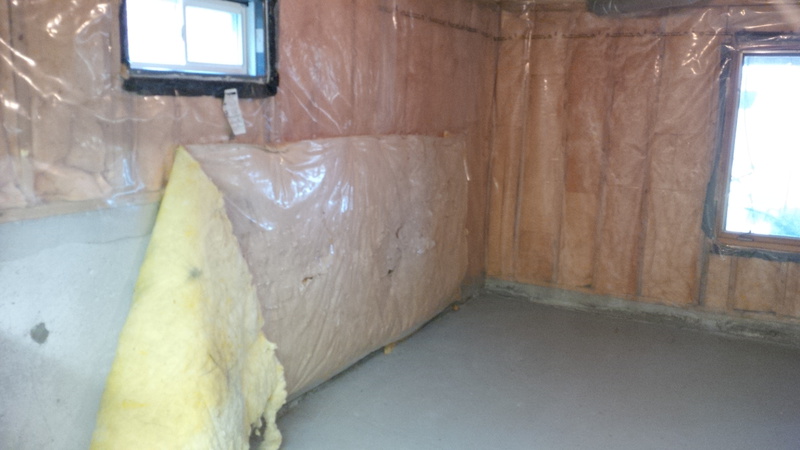
Most homeowners look at their basements and see storage space. Smart homeowners see energy loss,
moisture risk, and untapped value. The lower level affects every room above it.
That is why insulating basement walls in Toronto should never be an afterthought.
In a city with long winters and humid summers, foundations work hard. Concrete walls sit against
cold soil for months. Moisture pressure builds during thaw cycles and heavy rain.
Strategic insulating basement walls in Toronto help control these forces before damage begins.
What Is Your Basement Really Costing You?
Heat always moves toward cold surfaces. In winter, that cold surface is your foundation wall.
Without insulation, warmth escapes steadily through the concrete.
This heat loss forces your furnace to run longer. Energy bills increase without obvious warning signs.
You may only notice cold floors and uneven room temperatures.
Over time, condensation forms on cool interior surfaces. Damp air lingers and spreads upstairs.
That subtle moisture can trigger mold growth and material decay.
The real cost is not just higher utility bills. It includes long-term repair risks and reduced indoor
comfort.
Why Does Toronto’s Climate Demand a Smarter Approach?
Toronto experiences extended freezing periods each year. Soil temperatures remain low well into spring.
That sustained cold increases thermal stress on basement walls.
Spring melt adds heavy moisture around foundations. Saturated soil pushes water against concrete
surfaces. Any weakness in insulation or sealing becomes exposed quickly.
Summer humidity creates another challenge. Warm air enters and meets cooler basement walls.
Condensation forms again, even without visible leaks.
Effective insulating basement walls in Toronto must address both heat transfer and moisture control.
One without the other leaves the job incomplete.
What Makes Spray Foam a Practical Solution?
Not all insulation works well below grade. Fiberglass absorbs moisture and loses effectiveness.
It can trap dampness against foundation walls.
Closed-cell spray foam performs differently. It adheres directly to concrete and expands into gaps.
This creates both insulation and an air seal.
The material resists water absorption. It reduces vapor movement through the wall assembly.
This limits condensation and mold risk.
Spray foam also strengthens structural surfaces slightly. It bonds tightly and remains stable over time.
Performance does not decline with minor moisture exposure.
How Does Insulation Influence Air Quality?
Basements often act as air reservoirs for the home. Air from below circulates upward through stairwells
and ducts. Any moisture or mold spores follow that path.
Proper air sealing blocks uncontrolled airflow. Insulated rim joists prevent cold drafts from entering.
Indoor air becomes more consistent and predictable.
Dry surfaces discourage microbial growth. Reduced humidity levels support healthier breathing
conditions. Families notice fewer musty odors and cold spots.
When done correctly, insulating basement walls in Toronto supports both efficiency and well-being.
It creates a controlled environment rather than a reactive one.
Are Building Codes and Professional Installation Important?
Ontario building standards set minimum insulation requirements. R values and vapor control details must
align with the code. Improper installation can cause trapped moisture.
Professional installers assess wall conditions before starting work. They identify cracks, leaks, and
ventilation concerns. This evaluation prevents future complications.
Correct thickness and coverage matter greatly. Even small gaps reduce overall effectiveness.
Precision during application protects long-term performance.
What About Finished Basements and Rental Suites?
Many homeowners convert basements into living areas. Comfort and code compliance become essential.
Insulation should precede drywall and finishing materials.
Spray foam fits tightly within framing cavities. It supports renovation timelines without major disruption.
Once installed, it provides consistent thermal resistance.
A properly insulated basement stabilizes upper floor temperatures. Heating systems cycle less frequently.
Energy efficiency improves across the entire home.
Conclusion: Strength Starts Below Grade
Your basement is not just a storage zone. It is a structural and thermal foundation for your home.
Strategic insulating basement walls in Toronto reduce energy waste and moisture risk. It also improves
comfort in every season.
For homeowners seeking durable results, professional guidance matters. Spray Foam Insulation Kings
delivers basement insulation solutions tailored to Toronto’s climate and building standards. Their
approach to insulating basement walls in Toronto focuses on air sealing, moisture management, and
long-term energy efficiency.
When you strengthen the lowest level, you protect everything above it. Real comfort begins from the
ground up.
Comments
Post a Comment